
The Friends We Make Just for a Day [Issue #1]
A month and a half ago, I spent a day with a woman I had never seen before and will almost certainly never see again. It was a great day – among the best of a monthlong trip of great days.
This was three weeks in: I was standing outside Hong Kong’s Tin Hau MTR stop looking for the orange umbrella that signaled the start of the “Hidden Eats Food Tour,” when I noticed one other ethnically European person. She appeared to be in her 30s and plausibly looking for that very same umbrella, but my social awkwardness stopped me from immediately engaging. Fortunately, she’s far less awkward and broke the ice, confirming we were about to tour together. Her name was… “Monda”? No, Amanda: but Dutch.
An hour later, the tour guide asked how long we'd known each other, and I said “Five minutes longer than we've known you.”
Freed from the shackles of familiarity and routine, my awkwardness more easily melts away when I finally remember that if I say the wrong thing the wrong way, the social cost is 0: a weird travel story is still a fun story to tell. And most of the time, it doesn’t end up weird but still ends up fun.

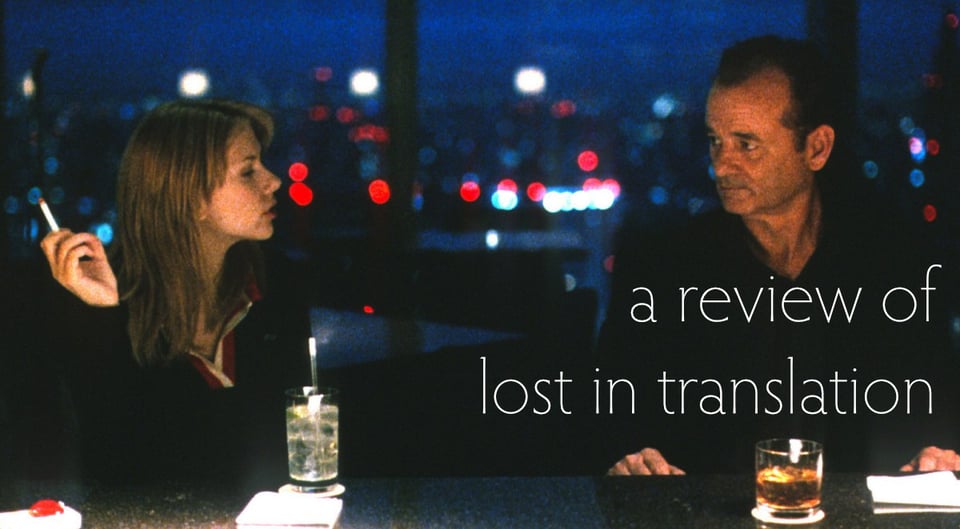
Two people get to tell the Tokyo Story of Lost in Translation (2003, dir. Sofia Coppola): for Charlotte No-Last-Name-Given (a 17-year-old Scarlett Johansson), it’s weird-and-fun; for Bob Harris (a 51-year-old Bill Murray), it probably should – though probably wouldn't – be just weird.
Despite the actor’s age, Charlotte is a 20-something with a philosophy degree and a successful photographer for a husband who was fine with her tagging along on his work trip, while Bob is a washed-up actor who found a second career making ludicrous amounts of money hocking Japanese whiskey. The two of them give those sorts of glances you sometimes give people in the beautiful bar of a beautiful hotel: he is dazzled because she’s 17-year-old Scarlet Johanson, and she’s fascinated because otherwise there’s no movie… or a much more disturbing movie.
It’s impossible to ignore this age gap – particularly once you learn ScarJo was an actual minor – but Lost in Translation threads the needle shockingly well by 1) constantly acknowledging it and 2) not actually being a love story. There is a sort of romance, and the pair obviously find each other attractive… but I mean that in at least three senses of the word, and “physically” is the least important one.
They are there to “complete” each other: to fill in gaps that they didn’t know they had. When we meet Charlotte, she's miserable and confused. She calls a friend back home and says she doesn't know who she married. And though she can't quite bring herself to repeat those words, they’re out in the universe. And when the universe sees that she is mostly annoyed by the people her age, it sends her a grumpy old man who's been doing the marriage thing longer than she's been alive.
And of course Bob is interested in the opposite. He has no intention of doing more than the bare minimum required to get his $2 million ($3.6 million with inflation). He goes to a commercial. He goes to a photo shoot. He does everything he can to avoid staying another day to go on the Johnny Carson of Japan. His wife is at home dealing with house renovations and also the children who, she points out, are used to not having their dad at home. When he tells her he loves her, she ignores it.
But he doesn’t say he loves her the first time we hear them talk. It’s not until after Bob has spent some time with Charlotte that he starts to warm up and kinda get the fuck over himself… at least a little bit. Whether Bob has realized that he actually appreciates his wife or he's just trying to clear his conscience cuz he's cavorting with a child isn't clear, but he said it like he meant it. And that’s not nothing.
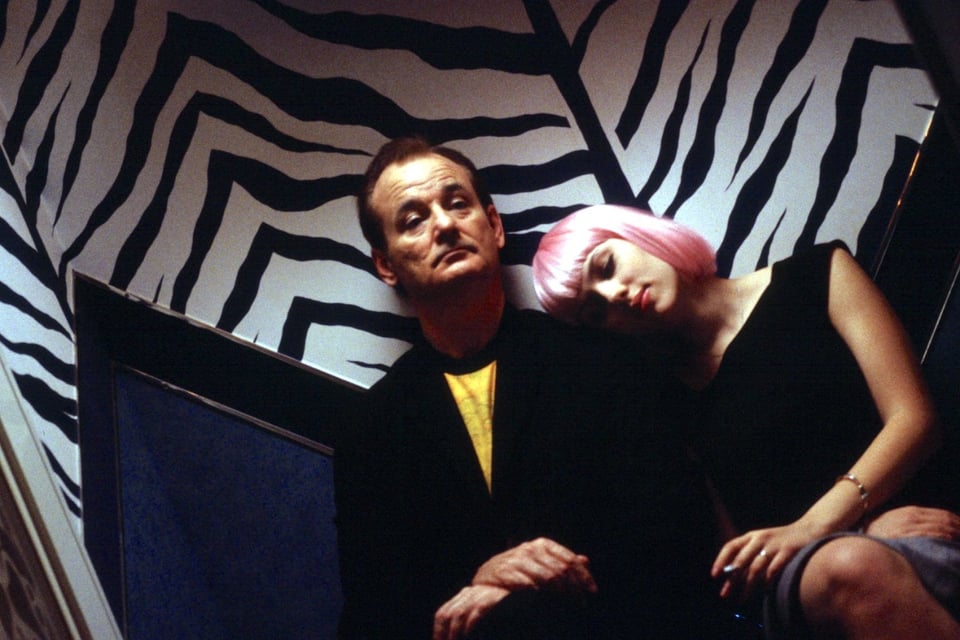
There really is power in just putting something out there. I put the need to end my last long-term relationship out to another Friend for a Day, one I met on a walking tour in Prague. He did marketing for V8, selling their non-tomato juices… and was around 15 years my senior.
I had sort of danced around the revelation throughout that trip as it became clear that absence was not making the heart grow fonder, but it finally came out when he and I were sitting in the back patio of a cafe that wasn't even on the tourist maps. He told me that he wasn't sure how his relationship was going to turn out, since both of them wanted to be near family and their families lived on opposite coasts. And I told him that I needed to break up with my girlfriend. I didn't want it to be true: I had chosen a life in New York for her – given up plans to teach English in South Korea because I knew our relationship wouldn’t survive it… and I still loved her. But I could feel that something was deeply, even fundamentally wrong, though I didn’t really know what it was.
Enter: the universe, metaphorically, which heard me and said “Here you go.”
Just a few weeks after that trip, I attended a press screening of The Last Witch Hunter, a Vin Diesel vehicle neither you nor I remember even though I apparently reviewed it, where I sat with a critic friend who introduced me to his +1, who would, by the end of the night, become my new best friend. Because what I hadn't understood was that I didn't have one of those… and I hadn't for some time.
Now I’ll admit that many of my friendships – especially in my early 20s – fit the “Borderline features” of my Mixed Personality Disorder: one month I’d be trying to figure out how to logistic them out of their house because they were fighting with their parents, and the next would be the last time we ever spoke even though we had just decided that we should live in the same building senior year fuuuuuuuck.
This was no different, starting as white hot and flaming out just as violently. But in that brief period, I felt the lack. I had a person I just wanted to hang out with.
Which is above anything else what Bob and Catherine are to each other. And that's what we spend much of Lost in Translation’s runtime doing: watching them hang out. There's no real plot and what minor conflict exists is forgotten within minutes. You can (and do) get lost in their silly little exploits right along with them: getting food, being at a club, doing karaoke. It makes you want to do those things… ideally in Japan… and even more ideally in the company of someone you enjoy. Because I'll tell you what: being a white person in Japan – and really much of Asia – is a distinctly isolating experience.
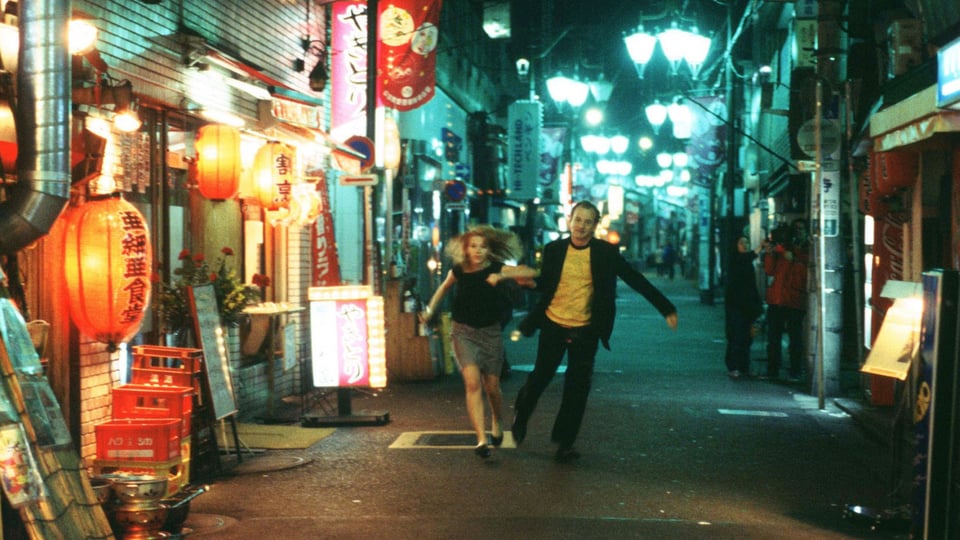
I'm decently well traveled, having been to twenty countries beyond the US: 4 in North and Central America; 9 in Europe; 7 in Asia. And I have felt othered and isolated in most of them. Tbh, that's part of the appeal for me.
In New York, I am one of millions of insignificant individuals, but I also look like a whole lot of the other millions of insignificant individuals: I speak the language, can read the signs. The city is for me. And that’s probably good for my mental health day-to-day, but I need to get out of that. I need to be in places where I don’t look like everyone else, where I don’t speak the language.
Maybe I didn’t need to be pulled over in Mexico by rifle-toting cops looking through white cars for who knows what… but it was a real reminder of my place and that my face will only get me so far. (Fortunately, my sister’s comparatively recent high school graduation meant her Spanish was exactly good enough to get us out of there.)
But at least I’ve heard Spanish: can read the “Policia” on their backs. It’s harder being in Chiang Mai trying to figure out where the fuck I’m supposed to turn because Google Maps is saying proper street names and every sign looks like squiggles.
It’s harder still being in a restaurant in Laos with a server – aged somewhere between 10 to 26 – making a face that suggests Google Translate did not actually ask “Does this come with rice?” And I’m honestly okay with just pointing and nodding and hoping for the best, but it’s fucking weird when the technology fails you like that.
On my last night in Hong Kong, I was mistakenly placed at a restaurant table with a family that did not speak English but very clearly wasn’t happy about my presence… and it took about fifteen minutes of glares from this mom sitting across from me for the waitstaff to move me somewhere else.
And those were a bad fifteen minutes!
So I can’t imagine how uncomfortable Bob would have felt in the scene that literalizes the film’s title: he sits on the set of a whiskey commercial being given Japanese direction, relying on an interpreter to convey the lengthy desires. And she doesn’t, really, condensing a paragraph of instruction to “Turn, look into the camera, and say the lines.”
A simple question (“Turn left or right?”) results in an even longer answer that becomes “Right Side, and with intensity.”
😐 (omg i can use emojis newsletters are the best)
Years ago, I interviewed Choi Min-sik (star of Oldboy and a whole bunch else), and though it was cool to have the opportunity, I could tell that I wasn’t hearing the answers to my questions and I’m not really sure he was hearing the questions at all. When I asked what he did during his hiatus from acting, the decently lengthy answer was translated as “You know the answer to that,” to which I said, “Ummm… okay” and just moved on.
I didn’t, obviously. And in any case there’s a 0% chance that that was what he said because it makes no fucking sense.
And I know that that’s one of the hardest jobs in the world but gosh damn was everything lost in that translation: mine, and Bob’s. And for both of us it was technically work but for Bob it was worth $2 million and for me it wasn’t even worth exposure so let’s not really compare them, but I get why he wants to get out of there and also why he’s interested in hanging out with someone who not only speaks his language but doesn’t bring the baggage of the other hotel patrons who know who he is… and also she’s Scarlet Johannson! (And she’s not a child in the fiction, so he can think that’s cool.)
And in the end, even though it matters it absolutely doesn’t matter. Even if they kiss at the end — even if there was more, they’ll still say goodbye forever.
Amanda and I didn’t kiss, if you were wondering (my girlfriend isn’t subscribed to this newsletter, but my mom is). Our escapades weren’t romantic, but we still had the fun of a blind date: of two people meeting for the first time and seeing where that takes them.
We found ourselves in a gallery space looking for a restroom and got in an elevator we weren’t supposed to take into an area we weren’t supposed to be in on a floor that wasn’t actually open: I started looking apologetically into the security cameras cause, like, we were absolutely not trying to be there but the signs weren’t in English! (And her being Dutch meant that it wasn’t entirely the fault of the American education system.)
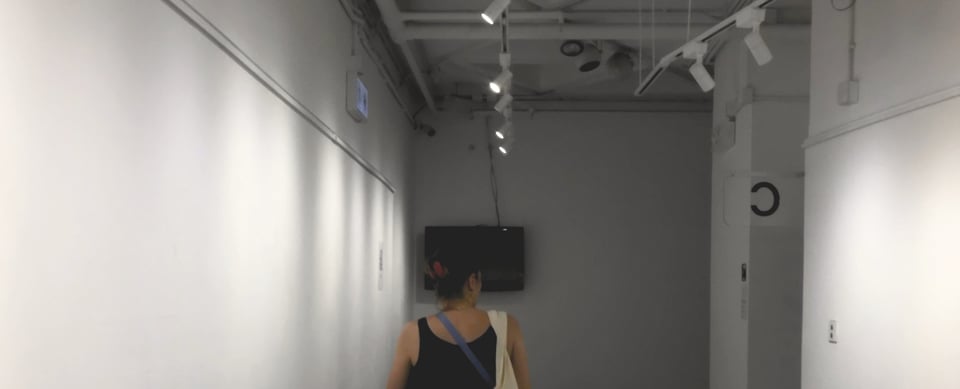
Normally, that kind of thing would stress me the heck out, but I wasn’t stressed. I was having fun experiencing a new place with this new person. I learned about her work and relationship to her work and relationship to her relationships and she learned about how not autistic I am.
And we could have kept going, I’m sure, but I had a dinner reservation at a 3-Michelin-star restaurant that I’d prepaid nearly the entire cost of my stay in Laos for, so it came to a fairly abrupt end. And when we said goodbye, that really was goodbye. We didn’t exchange information or make plans to meet up again. I guess we could have – I later found her email so I could send her a photo I’d taken – but it’s better that we didn’t. It’s better to let it be the great day that it was and the great memory that it is.
My second viewing of Lost In Translation – the one I’m pretending to review here – happened less than two weeks after that great day: It had only been three months since my first watch, actually, but the Museum of Modern Art was showing it on 35mm and how could I turn that down? Especially since this time I’d be prepared.
On the first go, I… was not. My pithy Letterboxd review – “God that was so fucking depressing” – came from the way it made me feel about myself. It reminded me of trips I’d taken and wanted to take and people I’d met and art I wanted to make. It made me feel like I should be doing more and feel bad that I hadn’t been.
I knew this time that I would spend it thinking about that day hanging out with Amanda… and the previous evening hanging out with those guys from Seattle and the half-day tour from a few days before hanging out with a Turkish woman and etc. etc. And I did, and even if there was some melancholy in that, it was nice to sit with those memories while watching a pretty fucking great movie. I haven’t really talked about it but Lost In Translation is pretty fucking great! Extremely fucking great, actually. I have no doubt that I’d love it even if I wasn’t comparing every single second to some moment or another in my life.
But I do do that and will always do that, and I hope that by the time I see it next I’ll have gotten lost in more new places with more new faces, and then again the time after and after and after. I hope that this movie can serve as a marker in my life, always there to remind me of the great times I had with people I’ll never see again.
Ten/10
Filed Under: Movies & TV